

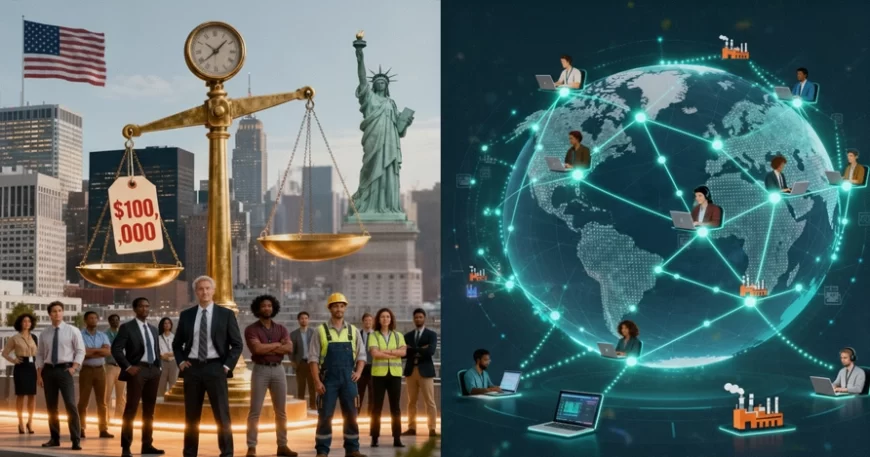
In September 2025, the Trump administration introduced a new one-time $100,000 fee for new H-1B visa applications, in an executive proclamation aimed at “protecting U.S. jobs.”
But will this steep visa fee really benefit American workers — or will it have unintended consequences like pushing companies to hire talent overseas, or even discouraging top global talent from applying? In this post, we examine both sides, analyze likely impacts, and explore what this means for U.S. businesses, foreign professionals, and the tech sector.
What the New Policy Actually Says:
- The $100,000 fee applies only to new H-1B petitions filed starting September 21, 2025.
- It is a one-time charge, not an annual fee, and does not apply to renewals or current H-1B holders.
- The policy is in effect for about 12 months unless modified or extended.
Arguments: Will It Protect U.S. Jobs?
1. Reducing Abuse of Visa System / Wage Suppression
One of the main arguments in favor is that companies sometimes use H-1B visas to hire foreign workers at lower compensation, especially in fields like software, data analytics, etc. Advocates believe the high fee will discourage companies from hiring cheaper foreign labour just to reduce costs — thereby helping American workers gain more opportunities and better wages.
2. Encouraging Domestic Hiring & Training U.S. Workers
With foreign labour now much more expensive (at least in terms of visa fees), companies may invest more in recruiting, training, or up-skilling domestic talent. This could lead to increased opportunities in American colleges, bootcamps, or tech training programs.
3. Limiting Over-Dependence on Foreign Workers in Entry-Level Roles
Some critics say H-1B visas have been used for roles that U.S. graduates could fill. A high fee might push companies to limit such hiring unless it’s clearly for highly specialized work that cannot be filled domestically.
4. Raising Wage Floors / Prevailing Wages
The policy may work to boost prevailing wages for foreign hires, which could have spillover effects for U.S. workers. If companies have to justify paying a high total cost (including visa fees) then they might offer more competitive salaries.
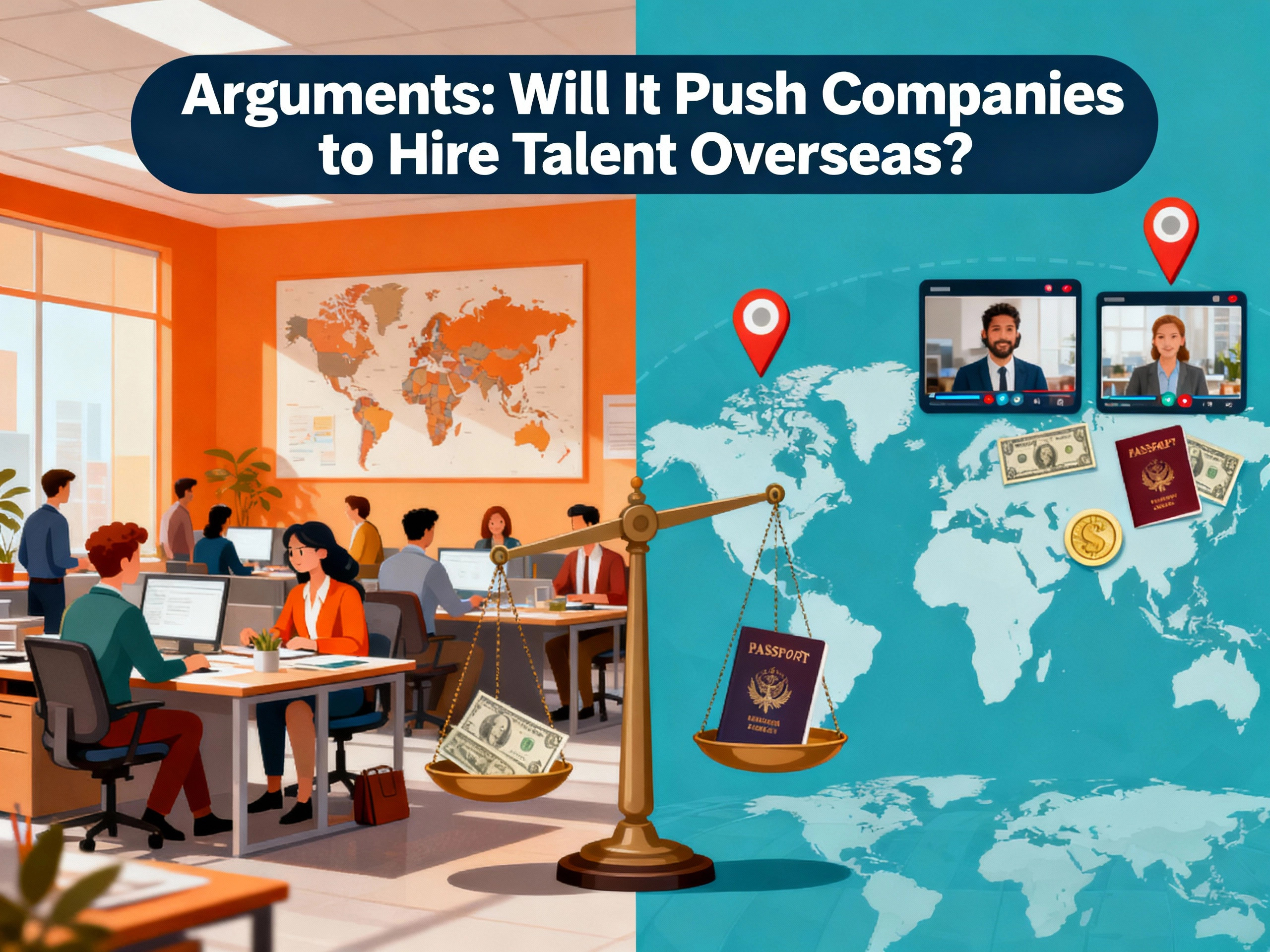
Arguments: Will It Push Companies to Hire Talent Overseas?
1. Cost Shock & Barrier for Small Businesses / Startups
The $100,000 fee is a massive cost increase. Big tech firms might absorb it, but startups or smaller firms will likely be hit hard. Many may decide it’s not worth sponsoring H-1B visas, and instead outsource work overseas or hire remote workers.
2. Global Talent May Choose Other Countries
Skilled foreign professionals (especially from India, China, etc.) may find the U.S. less attractive if visa application is cost-prohibitive. Countries like Canada, UK, Australia, or EU nations may become more appealing for students and tech workers. This could cause a “brain drain” away from the U.S.
3. Outsourcing / Offshoring Becomes More Attractive
If bringing talent into the U.S. is too expensive, firms may shift more work offshore or rely on remote teams in other countries. This could actually reduce jobs in the U.S., particularly for mid-level skilled programmers etc., rather than protect them.
4. Legal, Operational & Policy Uncertainty
Rapid changes in immigration policy like this create uncertainty. Companies might pause hiring or delay projects involving foreign talent. The fear of unintended consequences, litigation, or shifting rules may itself reduce hiring of H-1B candidates.
Likely Outcomes — What to Expect
- Big Tech & Large Employers Will Be More Selective: They might limit H-1B petitions to only essential, highly specialized roles. Roles with extraordinary skills or high compensation might still be approved.
- Startups Will Struggle: Many smaller tech firms or mid-size companies may reduce their reliance on H-1B visas or switch to remote/offshore hiring.
- Wage Pressure May Increase: For U.S. tech workers and graduates, this could be a favorable shift: demand for domestic workers may rise, pushing wages up in certain roles.
- Talent Flow Shifts: Countries with more welcoming immigration policies may gain ground. For foreign students, the U.S.’s attractiveness as a destination may reduce if post-graduation work opportunities become costlier or difficult.
- Potential Innovation Impact: The U.S. has benefited historically from attracting global talent. Reducing the inflow could slow innovation, especially in fields like AI, software, scientific research, etc. Some economists warn this could harm competitiveness.
Conclusion
For U.S. tech professionals, this might create new opportunities. But for foreign talent, particularly those from countries like India and China who have historically benefited from H-1B, the barrier just moved much higher.
What do you think?
- Will this encourage U.S. employers to invest more in local talent, or will costs force them to go offshore?
- If you are a tech professional (domestic or international), how do you plan to adapt to this change?3
Do you believe there are fairer ways to reform the H-1B system that balance protecting U.S. jobs and attracting global talent? Comment below.

