

Introduction
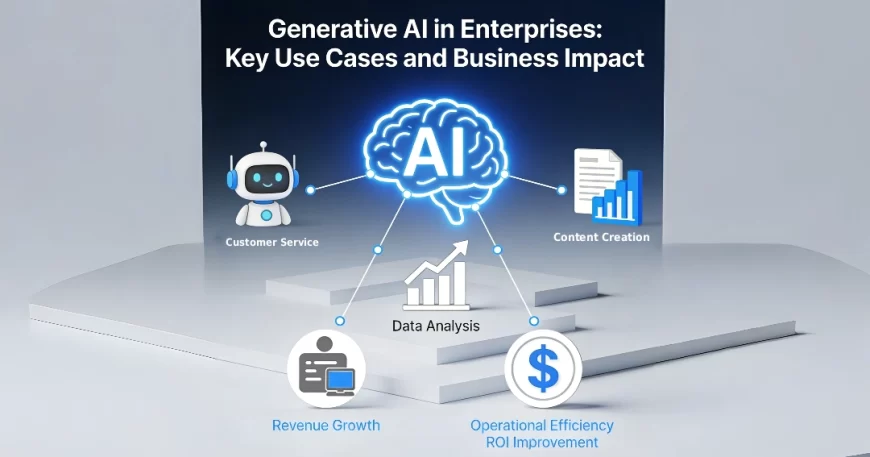
Generative AI is rapidly transforming how enterprises operate, innovate, and compete in today's digital economy. Unlike traditional AI systems that mainly analyze data, generative AI can create content, generate insights, and automate complex business processes.
Organizations across industries are adopting generative AI to streamline operations, improve productivity, and deliver better customer experiences. From intelligent automation to data-driven decision-making, generative AI is helping enterprises unlock new opportunities for growth and innovation.
This article explores the major use cases of generative AI in enterprises and its impact on modern business operations.
What Is Generative AI?
Generative AI refers to advanced artificial intelligence systems capable of creating new content, insights, and outputs based on patterns learned from large datasets. These systems use machine learning and deep learning models to generate human-like text, images, code, and analytical insights.
Unlike traditional AI models that focus mainly on prediction and classification, generative AI focuses on creation, automation, and intelligent problem-solving.
Common generative AI applications include:
- AI-powered chatbots and virtual assistants
- Automated document and content generation
- AI-assisted software development tools
- Data summarization and reporting systems
- Intelligent knowledge management platforms
For enterprises, generative AI provides the ability to automate workflows, accelerate innovation, and improve strategic decision-making.
Major Use Cases of Generative AI in Enterprises
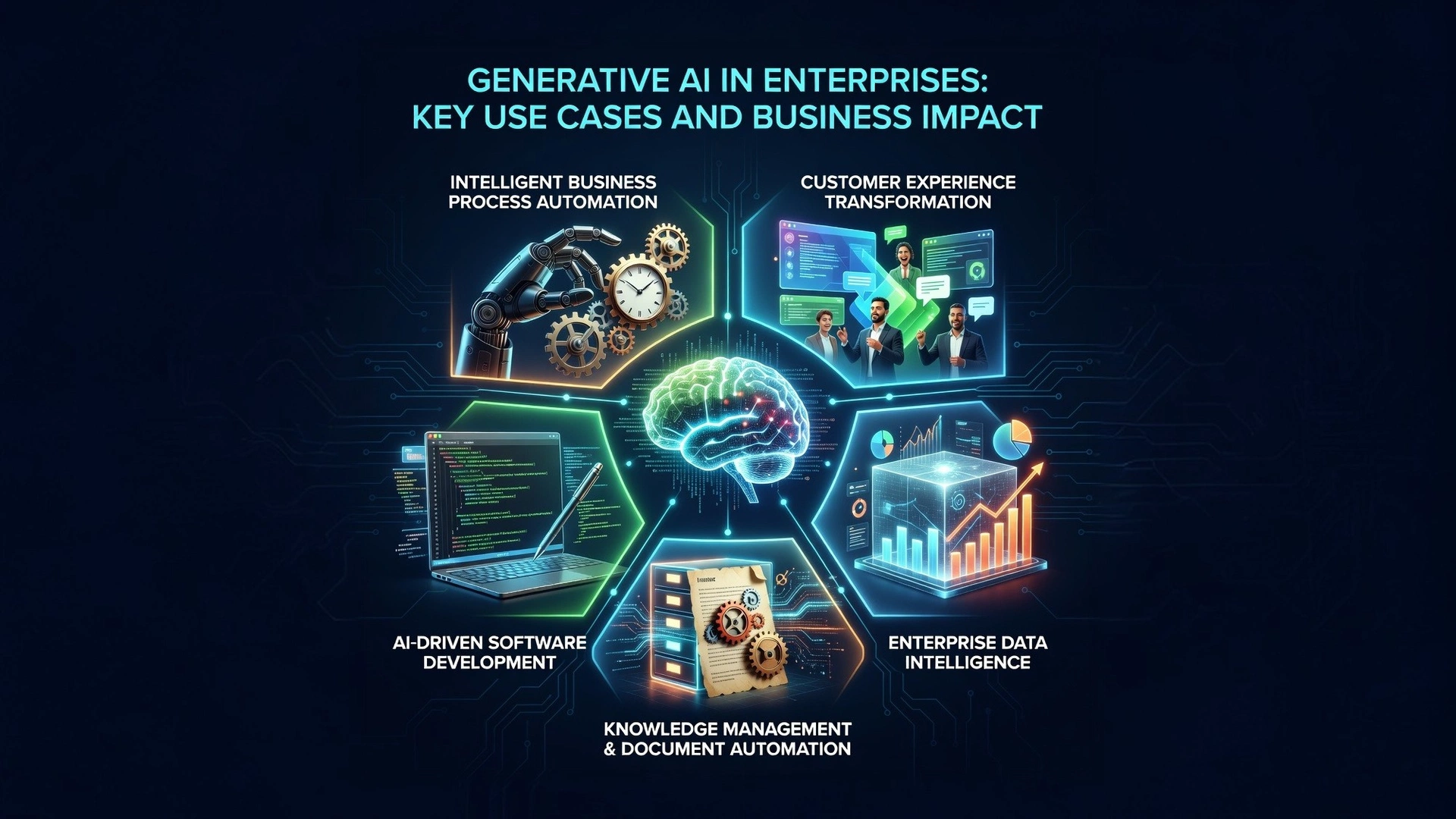
1. Intelligent Business Process Automation
One of the most valuable enterprise applications of generative AI is business process automation. Many organizations rely on repetitive manual tasks such as document processing, report creation, and workflow management. Generative AI helps automate these processes, reducing operational workload and improving efficiency.
Applications
- Automated report generation
- AI-driven workflow automation
- Business document creation
- Automated data processing
Business Impact
- Reduced manual work and operational costs
- Faster business process execution
- Improved operational efficiency
- Higher productivity across teams
Automation allows organizations to focus more on strategic activities instead of repetitive operational tasks.
2. Customer Experience Transformation
Customer expectations continue to evolve, and businesses must provide faster, more personalized experiences to stay competitive. Generative AI enables enterprises to transform customer engagement through intelligent automation and personalized communication.
AI-powered systems can analyze customer behavior, understand queries, and generate relevant responses instantly.
Applications
- AI-powered customer support assistants
- Intelligent chatbots for websites and mobile apps
- Personalized product recommendations
- Automated customer interaction systems
Business Impact
- Faster customer response times
- Improved customer satisfaction
- Increased customer engagement
- More personalized service experiences
By improving customer interactions, generative AI helps enterprises strengthen customer relationships and loyalty.
3. AI-Driven Software Development
Generative AI is reshaping the software development lifecycle by helping developers write, test, and optimize code more efficiently. AI-powered tools assist programmers by suggesting code snippets, detecting errors, and automating documentation tasks.
These tools significantly accelerate development processes while improving software quality.
Applications
- Code generation and auto-completion
- Automated debugging support
- Software documentation generation
- Code optimization recommendations
Business Impact
- Faster development cycles
- Increased developer productivity
- Improved code quality
- Reduced development costs
For technology-driven organizations, generative AI enables faster innovation and quicker product delivery.
4. Enterprise Data Intelligence
Enterprises generate vast amounts of data every day. Generative AI helps organizations analyze complex datasets and convert them into actionable insights that support strategic decision-making.
AI-powered analytics tools can identify patterns, summarize information, and provide predictive insights.
Applications
- Automated data analysis and reporting
- Data summarization and visualization
- Predictive analytics
- AI-generated insights for decision-making
Business Impact
- Faster and more accurate decisions
- Improved business intelligence capabilities
- Better understanding of market trends
- Enhanced strategic planning
By transforming raw data into valuable insights, generative AI enables organizations to make smarter business decisions.
5. Knowledge Management and Document Automation
Large enterprises manage significant volumes of documents, including contracts, internal reports, policies, and technical documentation. Generative AI helps automate document creation, summarization, and information retrieval.
This improves how organizations store, access, and share knowledge across teams.
Applications
- Automated document drafting
- Contract and report summarization
- Knowledge base management
- Intelligent document search
Business Impact
- Reduced manual documentation work
- Faster information access
- Improved collaboration across teams
- Better internal knowledge management
This use case is particularly valuable for organizations that rely heavily on documentation and knowledge sharing.
Benefits of Generative AI for Enterprises
Improved Operational Efficiency
Generative AI automates repetitive business tasks, allowing employees to focus on high-value strategic work.
Faster Innovation
Organizations can accelerate product development and experiment with new ideas more quickly.
Cost Optimization
Automation powered by generative AI helps reduce operational expenses across various departments.
Enhanced Customer Experience
Generative AI enables personalized customer interactions and faster service responses.
Data-Driven Decision Making
AI-generated insights allow business leaders to make informed decisions based on accurate and comprehensive data analysis.
Challenges of Implementing Generative AI
While generative AI offers many advantages, enterprises must also address several challenges.
Data Privacy and Security
Organizations must ensure AI systems comply with data protection regulations and safeguard sensitive information.
Accuracy and Reliability
AI-generated outputs may sometimes contain inaccuracies, making human supervision necessary.
Integration with Existing Systems
Businesses often need to integrate generative AI tools with existing IT infrastructure and legacy systems, which can require technical expertise.
The Future of Generative AI in Enterprises
Generative AI is expected to play a major role in the future of enterprise technology. As AI models continue to evolve, businesses will be able to automate increasingly complex workflows and generate deeper insights from their data.
Organizations that adopt generative AI early will gain a competitive advantage by improving efficiency, reducing costs, and driving innovation.
In the coming years, generative AI will become a core component of enterprise digital transformation strategies.
Conclusion
Generative AI is transforming enterprise operations by enabling intelligent automation, improving productivity, and delivering valuable insights. From business process automation to software development and data intelligence, generative AI is helping organizations operate more efficiently and innovate faster.
As businesses continue to adopt AI-driven technologies, generative AI will play an increasingly important role in shaping the future of enterprise innovation and digital transformation.
Organizations that strategically implement generative AI today will be better positioned to compete in an increasingly technology-driven marketplace.

