

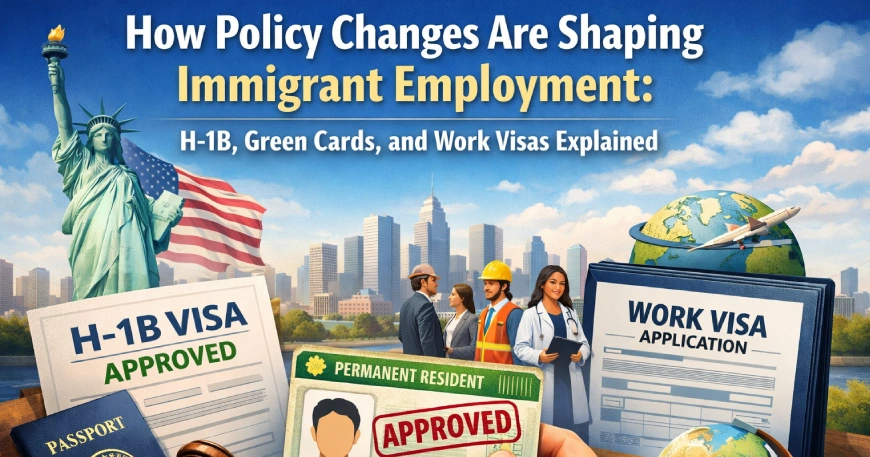
Immigrant employment has always played a critical role in global innovation, economic growth, and workforce stability. In recent years, policy changes around H-1B visas, employment-based green cards, and work visas have significantly reshaped how companies hire international talent and how skilled immigrants plan their careers.
As governments respond to economic pressures, labor shortages, and political shifts, immigration policies continue to evolve. These changes directly impact employers, foreign professionals, startups, and multinational corporations alike. Understanding how visa policy changes affect immigrant employment is now essential for businesses and job seekers navigating today's global workforce.
This blog explores how recent and ongoing immigration policy changes are shaping immigrant employment, with a specific focus on H-1B visas, green cards, and employment-based visas.
The Growing Importance of Immigrant Workers in the Global Economy
Immigrants fill critical skill gaps across industries such as technology, healthcare, engineering, finance, and research. Countries like the United States, Canada, the UK, and Australia rely heavily on foreign professionals to sustain innovation and economic competitiveness.
However, as demand for skilled labor rises, immigration systems are under pressure to balance workforce needs with regulatory oversight. This has led to policy reforms that directly influence hiring trends, visa approvals, and long-term employment stability for immigrants.
H-1B Visa Policy Changes and Employment Impact
The H-1B visa program remains one of the most widely used pathways for skilled foreign professionals, especially in IT, software development, data analytics, and engineering.
Key Policy Shifts Affecting H-1B Employment
Lottery System Reforms
Prioritizing higher-wage roles in the selection process
Increased Scrutiny
Stricter examination of job roles and employer relationships
Documentation Requirements
More rigorous compliance and evidence standards
More RFEs
Frequent Requests for Evidence during processing
These adjustments aim to protect domestic labor markets while ensuring that specialized roles still attract global talent.
How This Shapes Immigrant Employment
For immigrants, H-1B policy changes mean:
| Impact Area | Change |
|---|---|
| Skill Focus | Greater emphasis on specialized, high-value skills |
| Employer Reputation | Increased importance of compliance and credibility |
| Competition | More competition for limited visa slots |
For employers, hiring decisions now require strong workforce planning, legal preparedness, and competitive compensation structures.
Green Card Backlogs and Long-Term Employment Stability
Employment-based green cards offer immigrants long-term security and career mobility. However, green card backlogs, especially for professionals from countries with high demand, continue to shape employment decisions.
Policy Factors Influencing Green Card Processing
Country Caps
Per-country limits on green card allocations
Annual Quotas
Limited number of green cards available each year
Processing Delays
Administrative backlogs causing extended wait times
Priority Dates
Shifting priority in EB-2 and EB-3 visa categories
Employment Implications for Immigrants
Long green card waiting periods affect:
Career Progression
Limited job mobility and advancement opportunities
Employer Loyalty
Increased dependence on sponsoring employers
Family Planning
Challenges in long-term family stability decisions
As a result, many immigrants remain tied to sponsoring employers longer than expected, influencing workforce retention patterns across industries.
Work Visa Reforms and the Shift Toward Skills-Based Immigration
Beyond H-1B and green cards, many countries are revising work visa frameworks to attract global talent more strategically.
Emerging Trends in Work Visa Policies
Points-Based Systems
Evaluating candidates based on skills, education, and experience rather than nationality
STEM Pathways
Accelerated visa processing for science, technology, engineering, and mathematics professionals
Specialized Visas
Targeted visas for AI, cybersecurity, and healthcare workers
Remote Work Options
Digital nomad and remote work visa programs for global talent
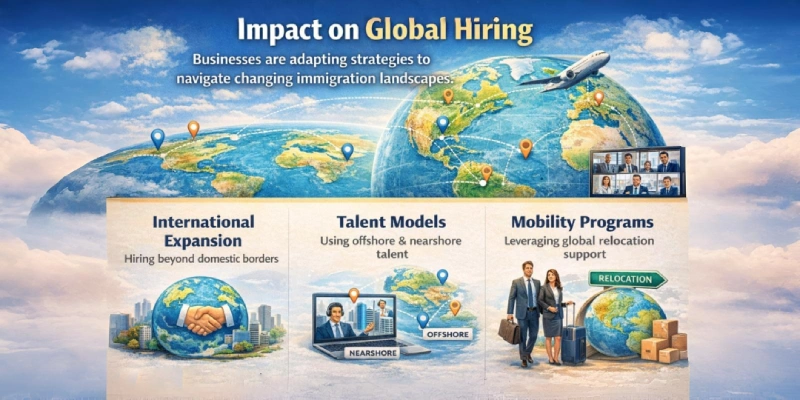
Impact on Global Hiring
Businesses are increasingly adapting their strategies to navigate changing immigration landscapes:
International Expansion
Expanding hiring strategies beyond domestic borders
Talent Models
Utilizing offshore and nearshore talent solutions
Mobility Programs
Leveraging global mobility and relocation support
For immigrants, this creates new employment opportunities but also demands continuous upskilling to stay competitive.
How Policy Changes Influence Employer Hiring Strategies
Immigration policy changes don't just affect immigrants—they also reshape employer behavior.
Organizations that proactively adapt to policy shifts are better positioned to retain skilled immigrant employees and remain competitive in talent-driven markets.
The Role of AI and Automation in Immigration and Employment
Governments and employers are increasingly integrating AI and automation into immigration processes and workforce planning.
AI in Immigration Policy and Employment Decisions
Automated Processing
Streamlined visa application and document screening
Labor Market Analysis
AI-driven insights into workforce needs and trends
Predictive Modeling
Forecasting workforce shortages and planning
Digital Compliance
Automated tracking and regulatory adherence systems
While AI improves efficiency, it also raises concerns about transparency and fairness, making human oversight and ethical implementation essential.
What Immigrant Professionals Should Do to Stay Competitive
In a policy-driven employment landscape, immigrant professionals must be proactive.
Practical Steps for Immigrant Job Seekers
Stay Informed
Regularly monitor visa and policy updates from reliable sources
Skill Development
Focus on high-demand, future-ready technical skills
Choose Wisely
Select employers with strong immigration track records
Build Credentials
Develop professional networks and industry certifications
Explore Options
Research alternative visa pathways and backup plans
Adaptability and awareness are now as important as technical expertise.
The Future of Immigrant Employment
Immigration policy will continue to evolve alongside economic and technological change. While stricter regulations may pose challenges, global demand for skilled immigrants remains strong.
Countries that strike the right balance between regulation and opportunity will attract the best talent. For immigrants and employers alike, success depends on policy awareness, strategic planning, and long-term vision.
Final Thoughts
Policy changes around H-1B visas, green cards, and work visas are undeniably reshaping immigrant employment. While challenges exist, these changes also open doors for innovation, skills-based hiring, and global workforce transformation.
Understanding immigration policies is no longer optional—it is a strategic necessity for businesses and professionals navigating the future of work.
