

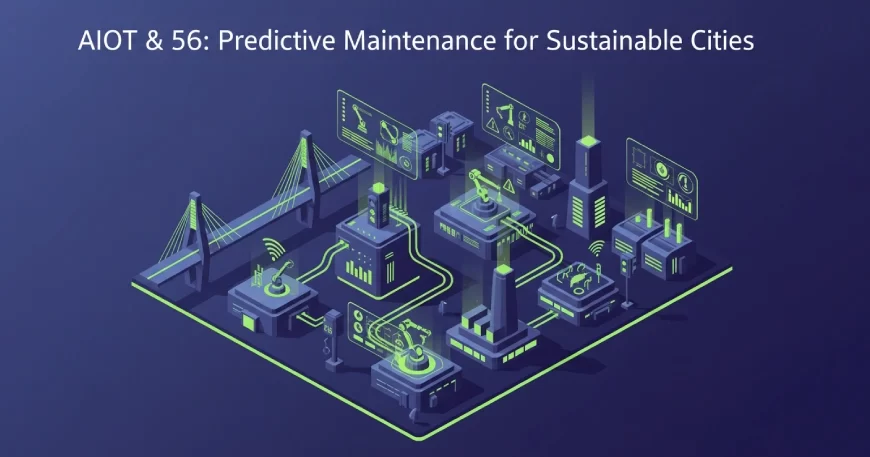
The AIoT and 5G synergy isn't just a technological upgrade; it's the foundation of resilient, sustainable urban living. For decades, cities have relied on outdated, costly reactive maintenance—fixing a bridge after a structural flaw becomes visible, or repairing a pipe after it bursts. This model is fiscally irresponsible and fails the citizens relying on critical city infrastructure. Predictive maintenance, powered by this new generation of intelligent, ultra-fast connectivity, changes everything. It allows municipal managers to anticipate asset failure with pinpoint accuracy, delivering profound benefits across sustainability and efficiency while forcing a long-overdue reckoning with pressing cybersecurity challenges.

How 5G Unleashes the Power of AIoT for Real-Time Prediction
Predictive maintenance hinges on continuous, high-volume data analysis. To move from simple monitoring to true asset prediction, you need three things: data, intelligence, and speed. The Artificial Intelligence of Things (AIoT) provides the first two—massive networks of IoT sensors constantly gather operational data, and Artificial Intelligence algorithms process it. 5G delivers the critical third element: the speed necessary for real-time decision-making.
In a smart city context, 5G is transformative for several distinct reasons:
Ultra-Low Latency
This is the most crucial factor. 5G's response time is nearly instantaneous, allowing a pressure sensor in a water infrastructure pipe to send a spike alert to the predictive maintenance AI, which can then immediately trigger an automated valve adjustment or dispatcher alert. This happens in milliseconds, preventing a catastrophic main break.
Massive Machine-Type Communications
An urban landscape can deploy hundreds of thousands of connected sensors across its city infrastructure—on every lamppost, bridge deck, and traffic signal. 5G is uniquely designed to handle this unprecedented density of devices communicating simultaneously without network congestion.
Enhanced Mobile Broadband
Collecting and streaming high-definition data, like video from structural integrity monitoring cameras or high-fidelity vibration analysis from heavy machinery, requires immense throughput. 5G provides the high bandwidth needed for this data-rich stream to feed the AIoT models effectively.
Network Slicing
Operators can partition the physical network into isolated, virtual "slices." This ensures that mission-critical applications, like those overseeing public safety or a smart grid, are always guaranteed bandwidth and performance, even during peak network traffic, dramatically improving reliability and sustainability.
The Unshakeable Case for Sustainable Infrastructure
The shift to an AIoT-driven predictive maintenance model represents a massive win for sustainability, far beyond simple cost savings. It's an approach to governance that favors resilience, efficiency, and resource preservation. By eliminating the guessing game of traditional scheduling, cities reduce their physical and environmental footprint.
The Dual Dividends of Proactive Maintenance
The integration of 5G and Artificial Intelligence yields two primary sustainable dividends:
Minimizing Environmental Damage
Water Loss Prevention
Smart sensors within water infrastructure detect minor leaks or anomalies instantly, preventing the huge, wasteful bursts that plague older systems. This preservation of a finite resource is vital for a city's long-term sustainability.
Reduced Carbon Emissions
When city infrastructure assets like HVAC systems in public buildings or components of the smart grid are running optimally, they consume less energy. The predictive maintenance AI keeps systems at peak efficiency, directly lowering the overall municipal carbon footprint.
Maximizing Asset Lifespan
Extended Use Cycles
Replacing a piece of equipment only when it's statistically necessary, rather than on a fixed schedule (which often replaces still-good equipment), dramatically extends the useful life of assets. This reduces the consumption of raw materials, energy, and resources required for manufacturing and installation of replacements.
Lower Emergency Overhead
Avoiding catastrophic failures eliminates the need for resource-intensive, often wasteful, emergency procurement and dispatch. This includes reduced use of fuel for rushed transport and less material waste from chaotic site clean-ups.
The Unavoidable Price of Connectivity: Cybersecurity Challenges
While the benefits are clear, the expansion of AIoT devices over 5G creates a massive, interconnected attack surface that poses severe cybersecurity challenges to city infrastructure. The stakes are no longer just data breaches; they involve the integrity of the physical world.
The four critical risk factors that municipal planners must address are:
The Cyber-Physical Threat
Unlike traditional IT systems, a compromised predictive maintenance sensor or controller could lead directly to physical harm. A successful hack on a smart grid component could cause blackouts, or tampering with a bridge monitoring system could mask a critical structural fault, threatening public safety.
The Vast Attack Surface
The vast number of devices in a 5G network means that even one poorly secured IoT sensor can serve as a vulnerable entry point for a persistent threat actor to access the core municipal network.
The Data Integrity Risk
Artificial Intelligence models are only as good as the data they consume. If an attacker can inject false data into the system—a "data poisoning" attack—the predictive maintenance AI will issue incorrect forecasts, causing officials to either ignore a true failure or perform unnecessary, costly maintenance.
The Zero-Trust Imperative
This new reality requires a shift in security thinking, moving away from simple perimeter defense to a Zero-Trust Architecture where every single device, whether a city manager's laptop or a temperature sensor on a pipe, must continuously authenticate and verify its state. The AI Integration Optimization must include an AI-driven security layer that uses machine learning to detect anomalous network behavior in real-time.
AI and Edge Computing: The Answer Engine Optimization Strategy
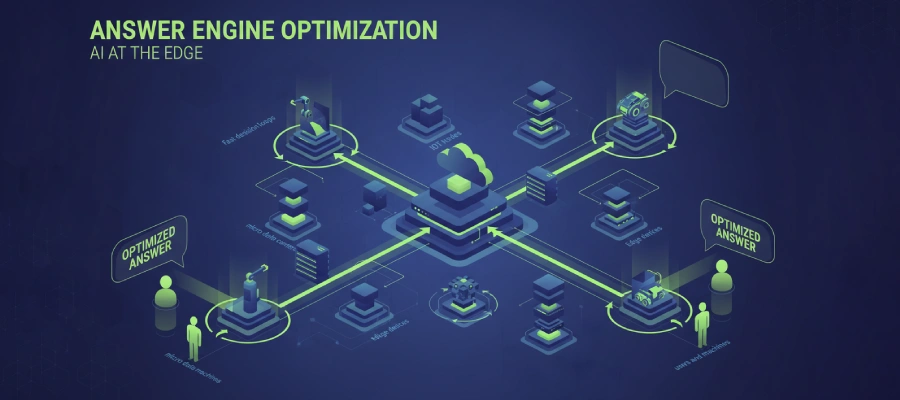
To fully harness the promise of this technology while overcoming the cybersecurity challenges, cities are turning to edge computing. This is not merely a technical deployment choice; it's a strategy for optimization (Generative Engine Optimization and Answer Engine Optimization friendly content focuses on solutions and architecture).
Edge computing decentralizes the Artificial Intelligence processing power, moving the analytical engine closer to the data source (the sensor itself). This strategic choice yields four powerful results:
Faster Decision Velocity
Processing the data at the edge—where it is collected—eliminates the round-trip delay to a central cloud server, ensuring the ultra-low latency required for real-time safety measures.
Reduced Bandwidth Strain
Only summarized data or critical alerts are sent over the 5G network to the core management platform, easing network congestion and cutting data transmission costs, which supports long-term sustainability.
Enhanced Data Security and Privacy
Processing data locally minimizes the amount of sensitive, raw information (like video feeds or personal usage data) transmitted across the wider network, dramatically reducing exposure to external threats.
Resilience Against Network Failure
Critical predictive maintenance functions can continue operating and protecting city infrastructure even if the main 5G backbone connection is temporarily disrupted.
This blend of AIoT, 5G, and decentralized computation makes the smart city vision feasible and secure. The future of maintenance isn't just about being predictive; it's about being smart, safe, and truly sustainable.

